Hebron economic losses in millions as Israeli siege continues for 10th day
Hebron’s economic losses could surpass $20m as Israeli forces demolish West Bank homes and close hundreds of businesses.
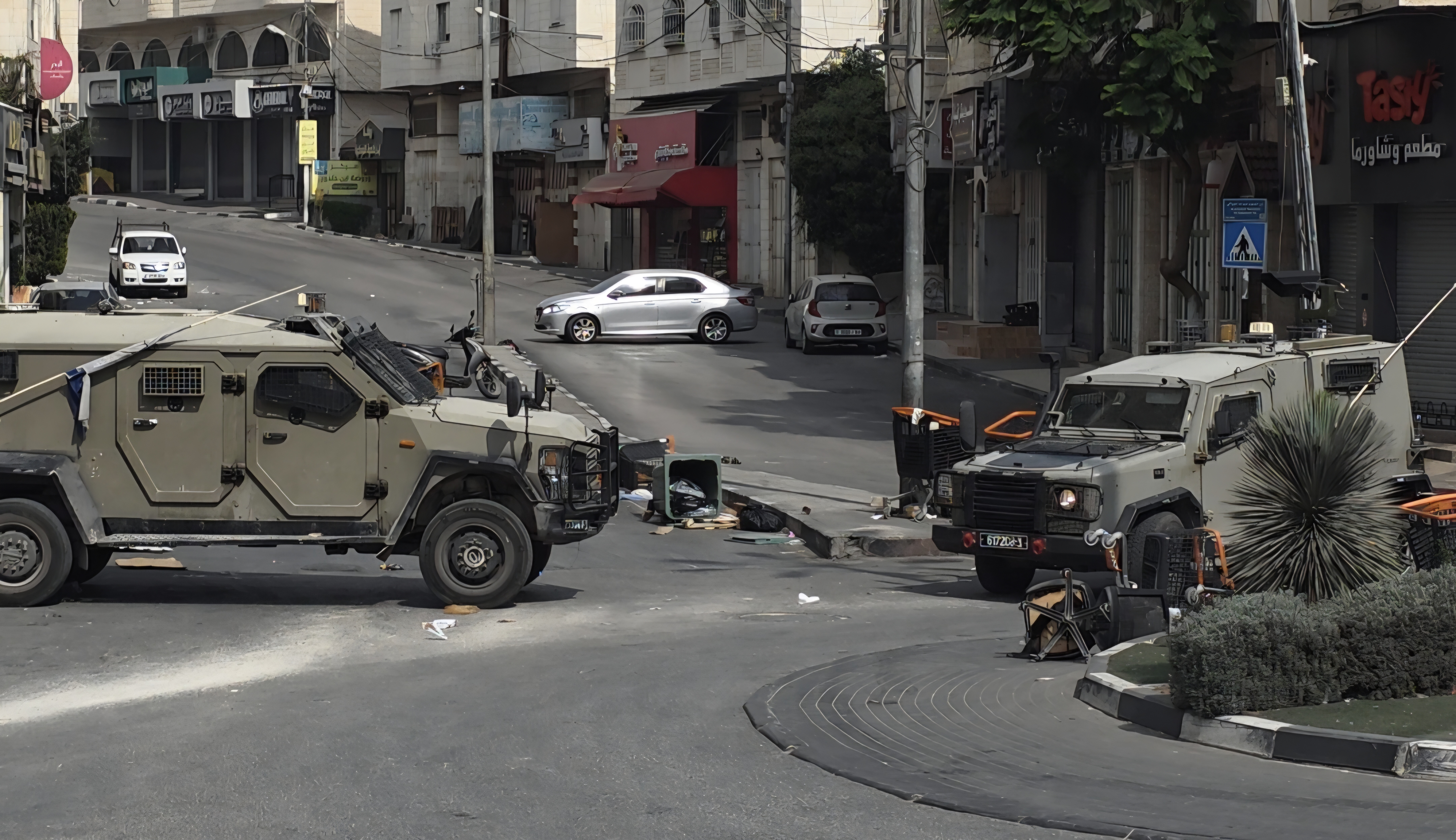

Israeli forces are maintaining their siege on the occupied West Bank city of Hebron for the 10th consecutive day, threatening to expand their offensive and forcing more Palestinian families from their homes.
The lockdown was enforced after two Israeli soldiers were killed in an attack on October 23 near Hebron.
Recommended Stories
list of 3 items- list 1 of 3How Israel choked off Hebron at 10 entrances, as 5,000 forced to flee
- list 2 of 3Israel demolishes homes of Palestinians blamed for attack on soldiers
- list 3 of 3Macklemore concludes ‘Free Palestine’ tour with solidarity message
More than 3,300 Palestinians have since been displaced or affected, with homes destroyed and businesses shut, according to the local municipality.
Mayor Yousef al-Jabari told Al Jazeera on Saturday that daily economic losses were estimated to exceed 12 million shekels ($3.8m), with more than $1.9m worth of damage to infrastructure, along with losses in the health and environmental sectors of about $160,000.
He said Israeli forces have demolished 15 homes and other structures and forced 327 businesses to close. About 80,000 students have been unable to attend school for 10 days, he added.
The mayor said Hebron accounts for about 40 percent of the Palestinian economy, and the siege amounts to “collective punishment”.
Palestinian families in and around the city fear the army could soon expand its attacks.
Raids and pogroms
Israeli arrests of Palestinians in Hebron and other cities in the occupied West Bank continued on Sunday.
Israeli forces arrested 10 Palestinian teachers in Masafer Yatta, south of Hebron, and seized their vehicle, the Palestinian news agency Wafa reported.
Video shared by Palestinian media and verified by Al Jazeera showed the Israeli military raiding a school run by the United Nations in the Shu’fat refugee camp in occupied East Jerusalem.
The UN humanitarian office, OCHA, said Israeli settlers carried out 397 attacks on Palestinians across the occupied West Bank in October, the highest monthly figure since monitoring began in 2006, Wafa said.
Between October 20 and 26, settler pogroms targeted 49 Palestinian communities, mostly while Palestinians harvested olives on their land.
Nine children were among 57 Palestinians injured by settlers and Israeli forces: 34 by military gunfire and physical assaults, and 23 in settler attacks.
Since the start of 2015, Israeli authorities have issued 9,518 demolition or stop-work notices against Palestinian property in the occupied West Bank, the Colonization and Wall Resistance Commission reported. It said that 344 of the notices were given in the first nine months of this year.
Yousuf Daas, a development and labour economist with the Palestine Economic Policy Research Institute, told Al Jazeera that business owners in Hebron had reported up to $20m in losses from destroyed stock, facilities, shops, and workshops since the lockdown began.
“Some of them were not even given the chance to empty their warehouses [before they were destroyed],” he said.
“Those are small and medium family-owned businesses built over decades, usually with no insurance. And they still carry bank loans. So the owner loses the business and keeps the debt.”
